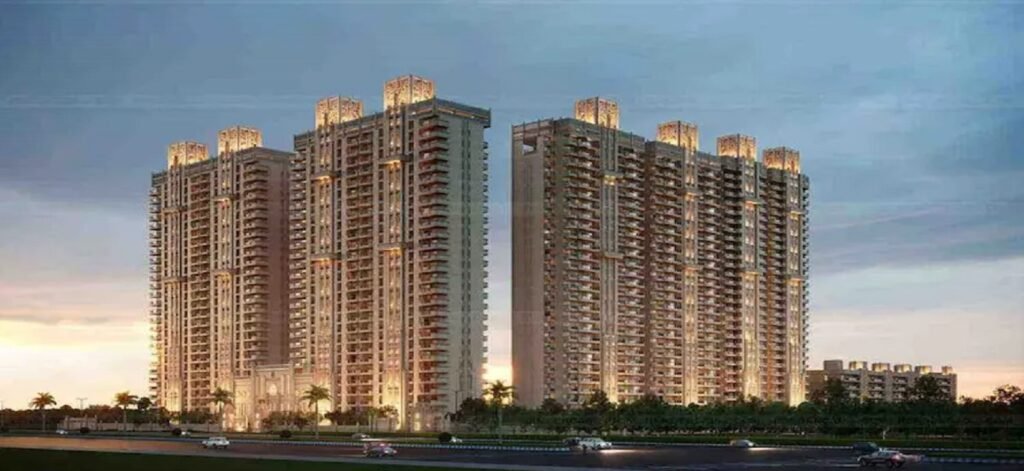

Gaur Dehradun Payment Plan is an important consideration for homebuyers and investors evaluating a new residential property in Dehradun. A clear payment plan helps buyers understand how much money may be required at the time of booking, during construction, and at later stages of the property purchase.
Visit:-https://www.gaurdehradun.com/
For a new residential development, the payment structure can depend on the apartment configuration, launch phase, construction progress, selected payment scheme, and final commercial terms offered by the developer. Therefore, buyers should always verify the latest official payment plan and complete cost sheet before making a booking.
A payment plan should not be evaluated separately from the property’s total cost. Buyers should consider the booking amount, instalments, applicable taxes, registration expenses, maintenance-related charges, parking or other project-specific costs, and home-loan requirements.
This guide explains how buyers can understand and evaluate the Gaur Dehradun Payment Plan, what charges to check, how construction-linked payments work, and what to consider before booking.
What Is the Gaur Dehradun Payment Plan?
The Gaur Dehradun Payment Plan refers to the schedule under which a buyer pays the purchase price of a residential property.
For an under-construction or new-launch project, the complete amount is generally not paid on a single day. Instead, payments may be divided into different stages according to the project’s commercial structure.
A typical payment structure may include:
- Booking or application amount
- Initial payment
- Agreement-related payment
- Construction-linked instalments
- Floor or location-related charges, where applicable
- Possession-related payment
- Registration and statutory expenses
- Maintenance or other applicable charges
The exact percentages and dates should be taken only from the official payment schedule applicable to the selected unit.
Gaur Dehradun Payment Plan – How It Works
A payment plan is designed to divide the property cost into manageable stages.
For example, under a construction-linked payment plan, the buyer may make payments when specific construction milestones are reached.
These milestones could include:
- Booking
- Agreement for Sale
- Excavation
- Foundation
- Plinth
- Structure completion
- Floor completion
- Internal finishing
- Possession
The actual milestones can differ from one project to another.
The advantage of this type of plan is that payments are connected to project progress rather than being concentrated entirely at the beginning.
Booking Amount
The first financial step is generally the booking or application amount.
A buyer interested in Gaur Dehradun may be required to pay a specified amount to reserve a particular apartment, subject to the developer’s official booking terms.
Before paying, buyers should understand:
- Whether the amount is refundable
- Cancellation conditions
- Time available to complete the next payment
- Whether the amount is adjusted against the property price
- Applicable taxes or charges
- Documentation required
Never transfer a substantial amount solely on the basis of a verbal offer.
Obtain an official payment receipt and written confirmation of the booking terms.
Initial Payment
After the booking stage, the buyer may be required to make an initial instalment according to the official payment schedule.
The amount can vary based on the selected apartment and the payment scheme.
The initial payment can have a significant impact on the buyer’s financial planning.
Before selecting a property, buyers should calculate how much of their own funds are available for the initial payment and how much will be financed through a home loan.
A realistic budget should also leave room for registration expenses, interiors, furniture, moving costs, and emergency savings.
Construction-Linked Payment Plan
A construction-linked plan is commonly considered by buyers purchasing an under-construction property.
Under this arrangement, payments are connected to specified construction milestones.
For example, a hypothetical structure could look like:
| Stage | Illustrative Payment |
|---|---|
| Booking | 10% |
| Agreement | 10% |
| Foundation | 10% |
| Structure Progress | 10% |
| Further Construction | 10% |
| Finishing Stage | 10% |
| Pre-Possession | 10% |
| Possession | Balance |
Important: This is only an illustrative example and not the official Gaur Dehradun payment plan. Buyers must obtain the actual payment schedule from the authorised developer or sales channel.
The benefit of a construction-linked structure is that payments generally correspond to the progress of the development.
Time-Linked Payment Plan
Another possible structure is a time-linked payment plan.
In this type of arrangement, payments are based primarily on predetermined dates rather than specific construction milestones.
For example, payments might become due at certain intervals after booking.
The buyer should carefully check the payment calendar before choosing such a plan.
A time-linked plan may require payments even if the buyer is primarily tracking construction progress, so understanding the contractual terms is important.
Down Payment Plan
Some residential developments may offer a down-payment-oriented structure.
Under such a plan, a larger portion of the property cost is paid earlier.
The possible advantage can be a promotional benefit or a different pricing structure, depending on the project’s official commercial terms.
However, buyers should not choose a large upfront payment simply because a discount is advertised.
The buyer needs to compare:
Discount received vs. cash-flow requirement vs. financing cost vs. overall property price.
A larger initial payment can reduce future instalments but may also reduce the buyer’s available liquidity.
Home Loan and Gaur Dehradun Payment Plan
Many homebuyers use housing finance to purchase property.
If you are planning to finance Gaur Dehradun through a home loan, the payment plan becomes particularly important.
The bank may disburse the loan amount in stages depending on the construction progress and project documentation.
Before booking, buyers should check:
- Loan eligibility
- Sanction amount
- Interest rate
- Loan tenure
- Processing fee
- Prepayment conditions
- Disbursement schedule
- Required margin contribution
- Project approval by the lender
The buyer should also maintain sufficient funds for expenses that may not be covered by the home loan.
Construction Progress and Loan Disbursement
For an under-construction property, banks may release funds in stages.
For example, if the developer raises a demand after reaching a specified construction milestone, the buyer may request the bank to release the corresponding amount.
The exact process depends on the lender and the loan agreement.
This is why the developer’s payment schedule and the bank’s disbursement schedule should be compatible.
Buyers should avoid assuming that the bank will automatically pay every demand.
The purchaser remains responsible for ensuring that the required documentation and loan formalities are completed on time.
Gaur Dehradun Payment Plan for Investors
Investors should approach payment plans differently from end-users.
An investor should consider the relationship between:
- Initial investment
- Instalment schedule
- Holding period
- Expected rental income
- Expected resale value
- Financing cost
- Maintenance expenses
- Taxes and transaction costs
A payment plan may appear affordable when viewed only as monthly or quarterly instalments.
However, the investor should calculate the total capital committed over the entire holding period.
Property investment should be evaluated based on realistic assumptions rather than guaranteed returns.
Payment Plan for End Users
For families buying a home for personal use, affordability is the most important consideration.
Before booking Gaur Dehradun, calculate:
Monthly Income
Determine how much stable income is available each month.
Existing Loans
Consider car loans, personal loans, education loans, credit-card payments, and other financial commitments.
Home Loan EMI
Estimate the expected EMI based on the required loan amount and interest rate.
Initial Contribution
Calculate how much cash will be required before the home loan starts covering the purchase.
Future Expenses
Consider school fees, household expenses, insurance, travel, medical expenses, and emergency funds.
A property payment plan should fit comfortably within the family’s overall financial structure.
Additional Charges to Check
The base property price is not always the final amount payable.
When evaluating the Gaur Dehradun payment plan, buyers should ask for a detailed cost sheet covering all applicable charges.
Depending on the project and applicable regulations, additional costs may include:
- Applicable GST
- Stamp duty
- Registration charges
- Maintenance charges
- Parking charges
- Utility connection charges
- Infrastructure charges
- Club or facility charges
- Legal or documentation charges
- Other applicable statutory or project-related expenses
The exact charges should be confirmed from official documents.
Stamp Duty and Registration
Property registration is an important part of the purchase process.
The buyer should separately budget for applicable stamp duty and registration charges.
These costs can represent a significant amount and should therefore not be overlooked while calculating the total purchase budget.
The applicable rates and rules can depend on the state and transaction circumstances.
Before registration, buyers should verify the current applicable charges and procedures.
Maintenance Charges
Maintenance is another cost that should be considered before purchasing a residential property.
Depending on the project structure, buyers may have to pay maintenance-related amounts either before possession or according to the developer’s applicable terms.
Ask for details about:
- Maintenance rate
- Maintenance deposit
- Common-area expenses
- Facility management
- Security
- Landscaping
- Club or amenity maintenance
Understanding these costs helps avoid unexpected expenses after possession.
Possession-Related Payment
Towards the completion stage, buyers may receive a final demand according to the project’s payment schedule.
This stage can involve the balance property amount and other applicable charges.
Before making the final payment, buyers should understand the possession procedure and relevant documentation.
The buyer should also verify the project’s applicable completion and occupancy-related approvals before taking possession, as applicable.
Why Buyers Should Ask for a Complete Cost Sheet
A complete cost sheet is one of the most important documents when comparing residential projects.
Suppose one project advertises a lower base price while another has a slightly higher base price but fewer additional charges.
The second property could potentially have a lower overall cost.
Therefore, comparing only the base rate can produce a misleading result.
The correct comparison is:
Total Payable Amount = Property Price + Applicable Charges + Taxes + Registration-Related Costs + Other Project Expenses
This gives the buyer a much clearer picture of affordability.
Payment Plan and Launch Offers
A new-launch project may sometimes have promotional payment options.
These could include:
- Limited-period launch pricing
- Early booking benefits
- Special payment schedules
- Construction-linked schemes
- Other promotional incentives
However, buyers should carefully read the terms and conditions.
A promotional payment plan may have specific eligibility requirements or validity periods.
Always ask:
“What is the final amount payable after all charges?”
This is more useful than asking only about the advertised discount.
Is a Lower Payment Plan Always Better?
Not necessarily.
A payment plan with smaller initial payments can make booking easier, but the future instalments may be higher.
Similarly, a plan requiring a larger initial payment could reduce future financial pressure but consume more of the buyer’s savings.
The best payment plan is the one that matches the buyer’s cash flow.
A financially comfortable purchase is generally more important than securing a property through an aggressive payment schedule.
How to Plan Your Budget
A simple budgeting approach can help.
Step 1 – Determine Property Budget
Decide the maximum property price you can realistically afford.
Step 2 – Calculate Available Savings
Identify funds available for the initial contribution and transaction expenses.
Step 3 – Estimate Home Loan
Determine the amount you may be eligible to borrow.
Step 4 – Calculate EMI
Estimate the monthly EMI under different interest-rate scenarios.
Step 5 – Add Other Expenses
Include taxes, registration, maintenance, interiors, furniture, and moving costs.
Step 6 – Maintain Emergency Funds
Do not use every available saving for the property purchase.
Keeping an emergency reserve is an important part of responsible financial planning.
Documents to Check Before Payment
Before making major payments, buyers should review the applicable documentation.
Important documents can include:
- RERA registration details
- Land title documents
- Approved layout
- Building plans
- Project approvals
- Agreement for Sale
- Payment schedule
- Price list
- Cost sheet
- Construction specifications
- Possession provisions
- Cancellation terms
The exact documentation depends on the project’s stage and applicable regulations.
For a substantial property transaction, independent legal advice can be valuable.
RERA and Payment Protection
RERA has significantly improved transparency in the Indian real estate sector.
Buyers should verify the project’s applicable RERA registration and review the information available on the relevant state RERA portal.
The registered information should correspond to the exact project and phase being purchased.
The payment schedule should also be consistent with the contractual documents.
Buyers should carefully read the Agreement for Sale before committing to substantial payments.
Gaur Dehradun Payment Plan – Frequently Asked Questions
What is the Gaur Dehradun Payment Plan?
It is the schedule under which buyers are expected to pay the property cost, including booking, instalments, and applicable additional charges according to the project’s official terms.
Is the Gaur Dehradun payment plan construction-linked?
The applicable payment structure should be confirmed from the official project payment schedule. Buyers should not rely on unofficial payment percentages published online.
Can I buy Gaur Dehradun with a home loan?
Home-loan financing may be available subject to the buyer’s eligibility, lender policies, project approvals, and documentation. Buyers should confirm the project’s status with their preferred lender.
How much should I pay at booking?
The exact booking amount depends on the official terms applicable to the project and selected unit. Obtain written confirmation before making payment.
Are taxes included in the property price?
Not necessarily. Buyers should request a complete cost sheet showing the base price and all applicable taxes and charges.
Does the payment plan include registration?
Registration and applicable statutory expenses should be checked separately unless explicitly included in the official cost sheet.
Can the payment plan change?
The applicable payment schedule is governed by the booking documents and Agreement for Sale. Buyers should carefully review the contractual terms before signing.
Should I choose a down-payment or construction-linked plan?
The better option depends on your financial position. Compare the total cost, cash-flow requirements, promotional benefits, and financing implications before selecting a plan.
Final Thoughts on Gaur Dehradun Payment Plan
The Gaur Dehradun Payment Plan is an important part of evaluating the overall affordability of a new residential property in Dehradun. A good payment plan should allow the buyer to manage the purchase without putting unnecessary pressure on their finances.
Whether you are a first-time homebuyer, an investor, a second-home buyer, or someone planning a long-term residence in Dehradun, the payment schedule should be studied alongside the property’s total price, location, specifications, legal documentation, developer credentials, and future potential.
The most important point is to avoid making a decision based only on a promotional payment plan or launch offer.
Before booking, ask for the latest official price list, complete cost sheet, payment schedule, applicable RERA details, floor plan, specifications, and Agreement for Sale.
Calculate the complete amount payable rather than focusing only on the booking amount or advertised monthly instalment. If you are taking a home loan, compare the loan amount, interest rate, EMI, tenure, and disbursement schedule with the developer’s payment demands.
A well-planned property purchase begins with a realistic budget and thorough due diligence. By understanding the Gaur Dehradun Payment Plan and comparing all associated costs, buyers can make a more informed decision and select a payment structure that suits their financial goals and long-term residential requirements.